
Python Institute PCEP-30-02 PCEP – Certified Entry-Level Python Programmer Online Training
Python Institute PCEP-30-02 Online Training
The questions for PCEP-30-02 were last updated at Feb 14,2026.
- Exam Code: PCEP-30-02
- Exam Name: PCEP – Certified Entry-Level Python Programmer
- Certification Provider: Python Institute
- Latest update: Feb 14,2026
Question #151
Python is an example of:
- A . a machine language
- B . a natural language
- C . a high-level programming language
Question #152
What is the expected output of the following code?
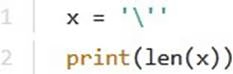
- A . 0
- B . 1
- C . The code is erroneous.
- D . 2
Question #153
Which of the following variable names are illegal? (Choose two.)
- A . True
- B . true
- C . and
- D . TRUE
Question #154
What is CPython?
- A . It’s a programming language that is a superset of the C language, designed to produce Python-like performance with code written in C.
- B . It’s a default, reference implementation of the Python language, written in C.
- C . It’s a programming language that is a superset of the Python, designed to produce C-like performance with code written in Python.
- D . It’s a default, reference implementation of the C language, written in Python.
Question #155
Question #156
What is the default value of encoding in the string function encode()?
- A . qwerty
- B . ascii
- C . utf-16
- D . utf-8
Question #157
What is machine code?
- A . A medium-level programming language consisting of the assembly code designed for the computer processor
- B . A low-level programming language consisting of binary digits/bit that the computer reads and understands
- C . A high-level programming language consisting of instruction lists that humans can read and understand
- D . A low-level programming language consisting of hexadecimal digits that make up high-level language instructions
Question #158
The pyc fi le contains …
- A . a Python interpreter.
- B . Python source code.
- C . compiled Python bytecode.
- D . a Python compiler.
Question #159
Select the true statements: (Choose two.)
- A . You can use keywords as variable names in Python
- B . You can use keywords as function names in Python
- C . You cannot use keywords as variable names in Python
- D . You cannot use keywords as function names in Python
Question #160
The escape character owes its name to the fact that it:
- A . cannot be caught due to its high speed
- B . escapes from source les into the computer memory
- C . changes the meaning of the character next to it
Latest PCEP-30-02 Dumps Valid Version with 124 Q&As
Latest And Valid Q&A | Instant Download | Once Fail, Full Refund
Subscribe
Login
0 Comments
